Premature bearing failure is usually traced to lubrication breakdown, misalignment, or contamination. Engineers can identify root causes through surface inspection and data analysis. This guide maps common symptoms to specific fixes to prevent repeat breakdowns.
- Early bearing death is rarely random; it follows specific mechanical or chemical patterns.
- Surface inspection of raceways reveals the exact failure mode within minutes.
- Vibration and temperature logging catches issues before audible noise appears.
- Maintenance records are as diagnostic as physical inspection.
Why early bearing death happens
Most bearing failures do not occur without warning. The raceways, rollers, and seals degrade in predictable ways before the unit seizes. Engineers often miss the early signals because they rely on failure reports rather than physical evidence. A failure report tells you the bearing is dead. It does not tell you why. To solve the problem, you must look at the physical part.
A bearing that dies in a quarter of its expected life usually has a specific cause. Contamination, insufficient lubrication, or mechanical stress are the usual suspects. The challenge is separating normal wear from the early stages of catastrophic failure. Normal wear happens when the contact pressure between the rolling elements and the raceways is within the design limits. The metal surfaces conform to each other over time. This is expected. Catastrophic failure looks different. It involves sudden material loss, deep pitting, or structural cracking. The difference between the two is the difference between a serviceable part and a part that needs immediate replacement.
You need a systematic approach to diagnose these issues. Start with the physical part. Then review the operating data. Finally, check the maintenance history. This three-step method identifies the root cause and prevents the same failure from recurring. If you only do one of these steps, you are only looking at one side of the problem. A bearing can look fine on the outside but be failing internally. It can look damaged internally but be fine because the damage happened after the unit was removed from service. You need all three data points to build a complete picture.
How to read surface damage
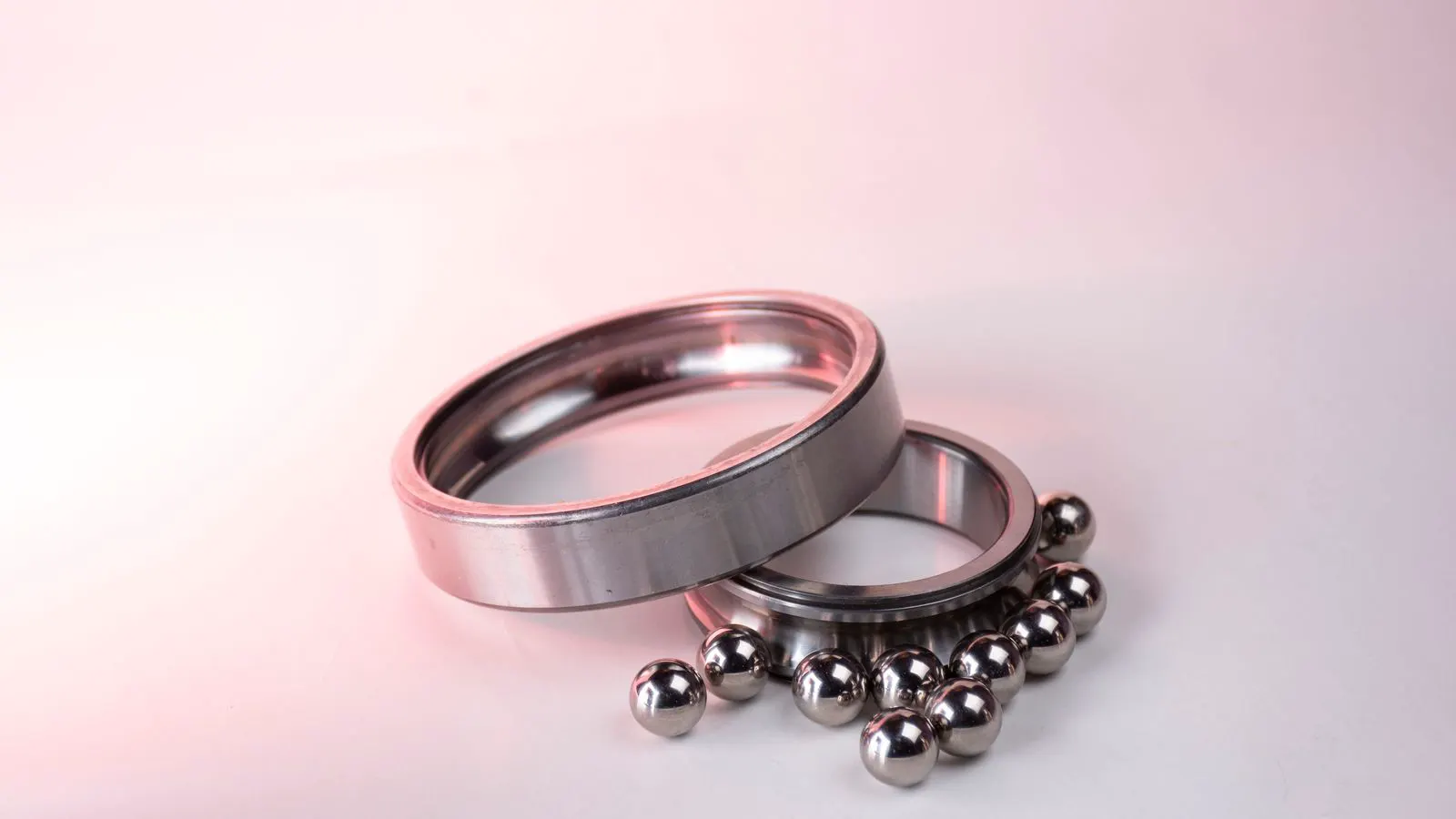
The raceway surface is the most direct source of truth. When you disassemble a failed bearing, look at the inner and outer rings. The pattern of wear tells you exactly what killed the component. The inner ring usually carries the load. The outer ring supports the load. If the inner ring shows deep spalling and the outer ring shows light wear, the load was applied directly to the rolling elements. If both rings show similar damage, the issue was likely contamination or lubrication.
Spall marks are small chips or pits in the raceway. They often point to lubrication failure or a lack of grease. The material looks like metal has been peeled away in a patchy way. If the spalls are shallow, the bearing may have been running dry. The grease film was thin enough to allow surface contact, but not thick enough to prevent metal fatigue. If they are deep and numerous, the failure was sudden and severe. Deep spalls indicate that the fatigue cracks propagated quickly through the material. This often happens when the bearing was overloaded or when the lubricant broke down completely.
Brinelling appears as small dents in the raceway. This happens when the load is too high for the contact area. The dents are usually round and shallow. They often show up on the side of the raceway that carries the heaviest radial load. Brinelling can also happen during storage. If a bearing is stored with the rollers in a specific position for a long time, the static pressure can deform the raceway. This is a common issue in warehouses where bearings sit for months before use. Check the storage conditions if you see fresh, shallow dents on a new bearing.
Corrosion is distinct from wear. It looks like a rust-colored stain or a dull, pitted surface. This indicates moisture intrusion. The seal failed, or the environment was too wet. Corrosion weakens the steel and leads to fatigue cracks. Once the surface is pitted by corrosion, the fatigue life of the bearing drops significantly. The pits act as stress concentrators. Cracks start at the bottom of these pits and grow through the material. This is why a bearing with light corrosion can fail much sooner than expected. The damage is already there before the bearing even starts running.
Common symptoms and their causes
The following table maps the symptoms engineers see in the field to the likely mechanical causes. Use this as a starting point for your troubleshooting process.
| Symptom | Likely cause | What to do |
|---|---|---|
| High temperature at the bearing housing | Insufficient grease or over-greasing | Check the grease quantity and re-lubricate with the correct spec |
| Intermittent grinding noise | Contamination or spalling | Inspect the seal and replace the bearing if spalls are deep |
| Vibration spikes at specific speeds | Misalignment or unbalanced load | Check shaft alignment and verify the load distribution |
| Grease leakage or discoloration | Seal failure or heat degradation | Inspect the seal and replace the unit if grease is contaminated |
| Uneven wear on raceways | Misalignment or improper installation | Check the mounting geometry and re-align the shaft assembly |
Vibration analysis for early detection
Vibration is the most reliable early warning system for bearing health. A healthy bearing produces a consistent, low-level hum. As the rolling elements degrade, the vibration signature changes. The key is to look at the frequency spectrum, not just the overall vibration amplitude. A high amplitude can be caused by many things, including loose mounting or unbalanced shafts. You need to identify the specific frequencies associated with the bearing.
You do not need an expensive lab setup to start. A portable accelerometer can detect changes in the vibration envelope. Look for peaks at the fundamental frequencies of the bearing. These frequencies correspond to the ball pass frequency, the roller frequency, and the spin frequency of the shaft. If the peaks grow over time, the rolling elements are failing. A sudden spike in one of these frequencies often points to a specific defect. For example, a peak at the outer race frequency usually means a defect is in the outer raceway. A peak at the inner race frequency means the defect is in the inner raceway.
Heat is a secondary indicator. A bearing that runs hotter than its design limit is losing efficiency. Friction from lack of lubrication or a damaged seal generates heat. Monitor the temperature over time. A steady rise is a clear signal to intervene. A sudden temperature spike usually indicates a blockage in the lubrication path or a sudden loss of grease. If the temperature rises gradually over several weeks, the grease is likely breaking down or being contaminated. In both cases, the bearing is running under suboptimal conditions.
Noise is the last line of defense. By the time you can hear a grinding or rumbling sound, the bearing is often already failing. Audible noise is not a diagnostic tool for early detection. It is a shutdown signal. Rely on vibration and temperature data to catch the problem earlier. If you only use your ears, you will miss the early stages of failure. The bearing will run quietly until the damage is severe.
Lubrication management and grease selection
Grease is not just a filler. It is the lubricant that separates the metal surfaces and carries the heat away. The wrong grease or the wrong amount causes more failures than any other factor. Grease is a semi-solid mixture of oil and thickener. The oil provides the lubrication film. The thickener holds the oil in place and prevents it from leaking out. The properties of the grease are determined by the type of thickener and the viscosity of the oil.
Too much grease causes overheating. The excess material creates drag, and the friction heat builds up inside the housing. This breaks down the grease and leads to premature failure. When you overfill a bearing, the grease is forced out of the lubrication path. It enters the seal area and can be pushed out into the surrounding environment. This leads to leakage and contamination. The correct amount of grease is usually about one-third to one-half of the free volume in the bearing. This leaves enough space for the grease to flow and circulate as the bearing spins.
Too little grease causes metal-to-metal contact. The raceways wear out quickly. The lack of oil in the contact zone means the metal surfaces slide against each other. This generates heat and wear. The raceway surface can glaze over, which increases friction and leads to further heating. This cycle accelerates the failure of the bearing.
Match the grease to the application. High-speed applications need low-viscosity greases that flow easily. These greases have a lower viscosity grade, which allows them to spread quickly and provide a thin, uniform film. Heavy loads require thicker, high-load greases with additives that build a protective film. These greases have a higher viscosity grade and contain additives that enhance their load-carrying capacity. Always check the manufacturer’s recommendation for the specific bearing type. The manufacturer knows the design limits of the bearing and the grease that works best with it.
Maintenance records and failure patterns
Do not throw away the old maintenance logs. They are a diagnostic tool. If a bearing fails in a specific area of the plant, check the history of that unit. The logs contain information about the operating hours, the temperature, and the lubrication events. This data helps you identify trends and patterns.
Did the previous bearing fail under the same conditions? If so, the root cause is in the design or the operating environment, not the part itself. If the failure is isolated to one unit, the cause is likely local, such as a dirty seal or a misaligned shaft. A local issue affects only one bearing. A design issue affects all bearings in the same type of application. This distinction is critical. If you replace a bearing without addressing a design issue, the next bearing will fail in the same way.
Track the time between failures. If bearings are dying earlier than expected, the issue is systemic. It could be a vibration problem, a contamination issue, or a lubrication schedule that is not working. Use the data to adjust the maintenance plan. For example, if the data shows that bearings fail after a certain number of hours, you can set a replacement interval based on that data. If the data shows that failures are random, you need to investigate the operating conditions more closely.
Prevention strategies for long service life
Prevention is cheaper than replacement. Use these steps to extend the life of your sealed industrial bearings.
- Inspect the seal before installation. A damaged seal lets water and dust into the bearing. This is the fastest way to cause corrosion and contamination. Check the seal for cracks, tears, or deformation. If the seal is damaged, replace it before installing the bearing. The seal is a cheap part. The bearing is not.
- Verify the grease quantity. Use the correct amount. Do not overfill the housing. Overfilling causes overheating and grease leakage. Underfilling causes metal-to-metal contact. Use a grease gun or a lubrication gun to apply the grease. Keep track of how much grease you use. This information is valuable for future maintenance.
- Check the alignment. Use a dial indicator or laser alignment tool to ensure the shaft is straight. Misalignment causes uneven load distribution on the raceways. This leads to accelerated wear on one side of the bearing. Alignment is a one-time task, but it has a long-term impact on bearing life.
- Monitor the temperature. Set a threshold and alert if the bearing exceeds it. Temperature is a direct indicator of friction. If the friction increases, the temperature rises. If the temperature rises, the bearing is in trouble. Set the threshold based on the operating conditions. A bearing that runs at 60 degrees Celsius is fine. A bearing that runs at 80 degrees Celsius is not.
- Keep a log. Record the installation date, the grease used, and the operating hours. This log is your maintenance record. It helps you identify patterns and trends. It also helps you prove that the bearing was maintained correctly. If a bearing fails, the log helps you determine whether the failure was due to poor maintenance or a design issue.
Final thoughts on bearing troubleshooting
Bearing failure is not a mystery. It is a mechanical event with a clear cause. When you look at the raceways, check the vibration data, and review the maintenance history, the cause becomes obvious. The physical evidence, the vibration data, and the maintenance records all point to the same cause. If they do not, you are missing something.
Do not guess. Do not replace the bearing and hope for the best. Identify the root cause. Fix the system. Then install the new part. This is the only way to stop the cycle of early failure. If you replace a bearing without addressing the root cause, the next bearing will fail in the same way. The cost of the replacement is only the first part of the cost. The downtime, the labor, and the production loss are the real costs.
Frequently asked questions
How do I know if a bearing is failing before it breaks?
Check the temperature and vibration levels. A steady rise in heat or a change in the vibration signature is an early warning.
Can over-greasing cause bearing failure?
Yes. Excess grease creates drag and friction heat. This breaks down the lubricant and leads to premature failure.
What is the best grease for high-speed bearings?
Use a low-viscosity grease that flows easily at high temperatures. Always match the grease spec to the bearing manufacturer's recommendation.
Is corrosion a sign of a seal failure?
Usually yes. Moisture intrusion causes rust on the raceways. Check the seal and the environment for leaks.
How often should I inspect the bearings?
Inspect them during routine maintenance. Check for noise, temperature, and grease leakage. Increase the frequency if the operating conditions are harsh.